
Contact: +91 99725 24322 |
Menu
Menu
Quick summary: Dive into the world of measuring greenhouse gas (GHG) emissions and understand its significance in combating climate change. Explore the methodologies, tools, and challenges involved in accurately quantifying and monitoring GHG emissions. Discover how businesses and industries are embracing emission measurement practices to drive sustainability initiatives and make informed decisions for a greener future.
Measuring greenhouse gas emissions (GHG) is a crucial step in understanding and addressing the environmental impact of various sectors including agriculture, industry and transportation. Accurate measurement of GHG emissions enables us to identify sources, set reduction targets and track progress towards a sustainable future. In this blog, we explore the necessity for measuring GHG emissions, methodologies used for measurement and the challenges and considerations involved. Join us in uncovering insights into measurement of GHG emissions and how they play a key role in climate change mitigation.
Peter Drucker famously taught: “If you can’t measure it, you can’t improve it.” While that applies to business management, it is also important for reducing Green House Gases (GHG).
GHG are gases that can trap heat, creating a warming effect on the earth. The major GHG are carbon dioxide, methane, ozone, nitrous oxide and Chlorofluorocarbons. Often the non-carbon dioxide gases are converted to carbon dioxide equivalent to create a single number to report GHG.
Measuring GHG is a key step to reduce emissions. Emissions are reported as Scope 1, 2, or 3.
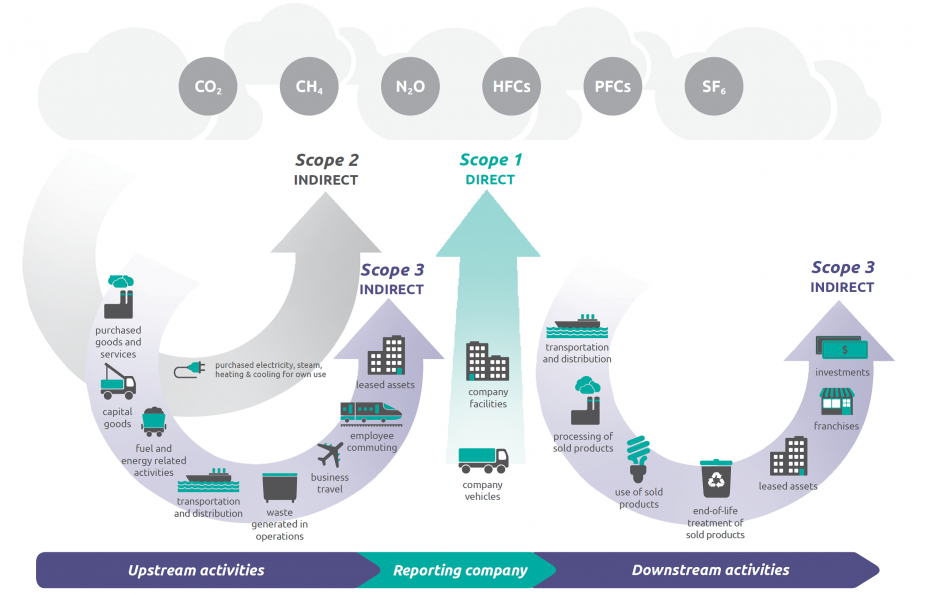
Scope 1 emissions are direct GHG emissions that occur from sources that are controlled or owned by an organization (e.g., emissions associated with fuel combustion in boilers, furnaces, vehicles).
Scope 2 GHG emissions are indirect emissions associated with the purchase of electricity, steam, heat, or cooling.
Scope 3 emissions come from the businesses customers and vendors. These emissions are the result of activities from impacts in its value chain.
All emissions not included in an organizations Scope 1 or 2 emissions are counted in their Scope 3 emissions. These Scope 3 emissions are also referred to as value chain emissions, and they often represent the majority of an organization’s total GHG emissions.
Measuring GHG emissions provides several benefits to organizations, including identifying emission sources, setting reduction targets, demonstrating commitment to sustainability, reducing costs, complying with regulations, and improving reputation. By measuring emissions and taking action to reduce them, organizations can contribute to the fight against climate change and benefit from increased sustainability and reduced costs.
The push towards Net Zero has become increasingly urgent, resulting in greater regulation and pressure on companies to reduce their emissions. Companies need to be more conscious than ever about not only the direct greenhouse gases (GHG) they produce, but also of their indirect emissions. To achieve Net Zero, companies need to be conscious to track their direct and indirect emissions, and take a holistic approach to reducing their GHG emissions. By doing so, companies can not only contribute to the fight against climate change but also benefit from reduced energy costs and increased sustainability.
With the rise in companies and countries all over the world calculating their greenhouse gas emissions (GHGs), measuring Carbon Dioxide Equivalent (CO2e) in kg is becoming increasingly commonplace.
Greenhouse Gases (GHGs) have created large-scale imbalances in our environment, as they are being generated faster than they can be sequestered. The gas most often quoted as being most impactful on Global Warming and Climate Change is Carbon Dioxide (CO2) but many other gases also play their own role, including,
All GHGs allow sunlight to pass through the atmosphere, but then trap the excess heat from that sunlight, stopping it from being able to leave, and turning the atmosphere into a kind of greenhouse with the Earth sitting in the middle, hence the name.
Each gas has a specific global warming potential (GWP), which allows comparisons of the amount of energy the emissions of 1 tonne of a gas will absorb over a given time period, usually a 100-year averaging time, compared with the emissions of 1 tonne of CO2.
To measure emissions it becomes important to take a product’s Life Cycle Analysis (LCA) into account when analyzing emissions. In other words, the environmental impact it has over the course of its existence, from the energy used to produce it to the ecological consequences at the end of its useful life. LCA aids in creating a picture of the effects that various goods and services have. You may decide what levers are available to modify in order to reduce emissions once you have a thorough understanding of all the various components and services involved.
When measuring greenhouse gas emissions, we need to understand the obligations around Scope 1, Scope 2 and Scope 3 emissions.
Scope 1 emissions- These are direct emissions from company-owned and controlled resources. Emissions are released into the atmosphere as a direct result of a set of activities at a firm level.
Scope 2 emissions- These are indirect emissions from the generation of purchased energy, from a utility provider. The GHG emissions are released in the atmosphere from the consumption of purchased electricity, steam, heat and cooling.
Scope 3 emissions – These emissions are the indirect emissions not included in Scope 2 that occur in the value chain of the reporting company, including both upstream and downstream emissions. Emissions are linked to the company’s operations. According to GHG protocol, scope 3 emissions are separated into 15 categories.
There are 3 essential steps to measure GHGs:
There are 6 main gases covered by the Kyoto protocol. Organizations should also identify the emissions their activity is most likely to emit, as different activities release different greenhouse gases. These findings influence the GHG emissions you choose to measure.
The data sets related to agriculture emissions are:
Farm inputs- Type and amount used like fertilizers, pesticides and fuel for machinery.
Crop Data-Data on crop yield and practices like Irrigation methods, tillage practices, residue management. Emissions from agriculture soils such as nitrous oxide from fertilizer application or organic matter decomposition is estimated using crop data.
Energy consumption- Data on energy use with agriculture operations, including electricity consumption and fuel consumption.
Livestock data- Data on number and type of livestock and their daily feed intake. Livestock emissions including methane from enteric fermentation and manure management are calculated based on this.
Waste management – Information on handling and treatment of agriculture waste such as crop residues or manure. Methane emissions are considered from this.
Land-use change- Data on land-use change such as deforestation, forest conversion to agriculture land.
Emission factors- Emission factors specific to agriculture activities are necessary to convert the activity data into GHG emissions.
Tracking of activity data like fertilizer application rate, fuel consumption and livestock inventories are important.
Boundaries- Establishing boundaries such as upstream or downstream emissions is crucial for accurate emission assessment.
GHG calculations in the agriculture sector can be complex and require specialized methodologies and models. Additionally, regional or country specific data and emission estimation guidelines is necessary for accurate assessments. A prescribed set of emission factors specifies how emissions for different categories of pollutant should be calculated. Greenhouse gases are then calculated by multiplying these emission factors by the activity data.
GHG emission = Activity data x Emission Factor
Trace Carbon is a one-stop carbon management platform that can help companies in their decarbonization journey by measuring GHG emissions. The platform captures the granular level carbon emissions of a product from production to consumption and its end cycle. This enables companies to assess carbon hotspots and identify abatement strategies to reduce emissions.
The platform can also help companies measure the impacts of sustainable farming practices and generate reports to fulfill sustainability commitments and achieve sustainable development goals. By measuring GHG emissions, companies can identify areas for improvement and set reduction targets.
Trace Carbon can help companies in several ways, such as:
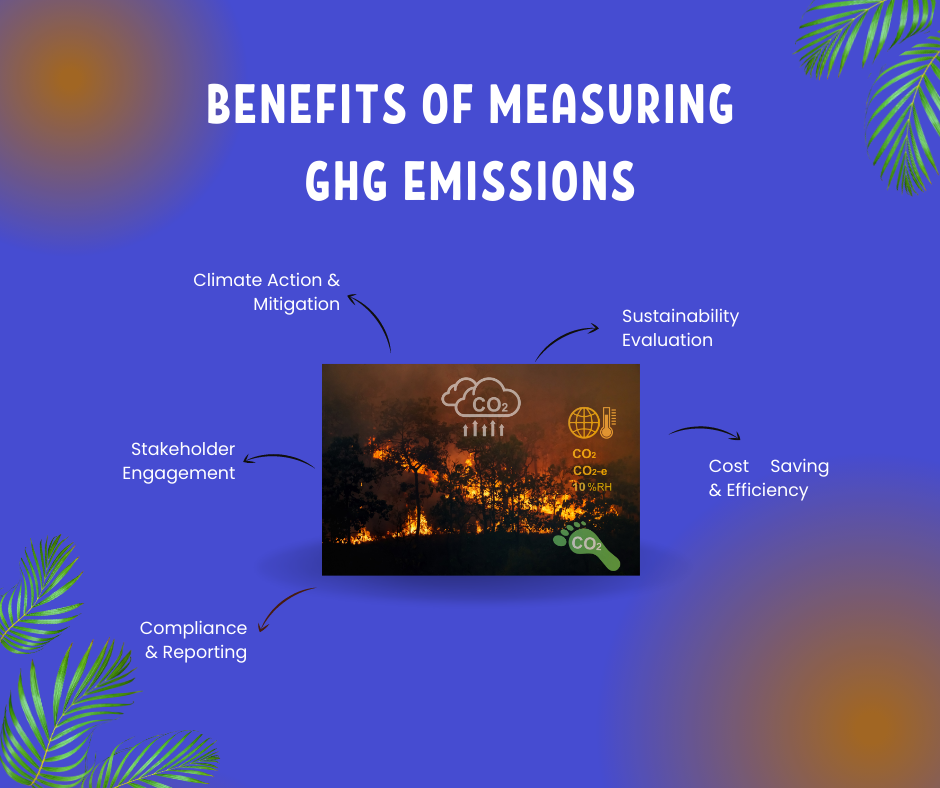
By measuring GHG emissions, companies can contribute to the fight against climate change and benefit from increased sustainability.
Measuring greenhouse gas (GHG) emissions is essential for organizations to understand their carbon impact and identify opportunities for improvement. By measuring GHG emissions, companies can identify emission sources, set reduction targets, and develop strategies to achieve them. This helps reduce costs, comply with regulations, and demonstrate commitment to sustainability, ultimately improving their reputation. Measuring GHG emissions can also contribute to the fight against climate change by reducing emissions and helping to achieve global climate goals. Overall, measuring GHG emissions is a crucial step towards achieving sustainability and reducing carbon footprint, and can provide numerous benefits for organizations and the planet as a whole.

What is food traceability | Types of traceability in supply chains | Food traceability best practices | Traceability in the food industry | Digital traceability system | Blockchain food traceability solutions | QR code traceability for consumer trust | ERP integration for traceability | Conscious consumerism through traceability | Food system transformation with traceability | Coffee supply chain guide | Coffee traceability from bean to cup | Sustainable coffee supply chain | Regenerative agriculture for coffee | Agroforestry in the coffee value chain | Rainforest Alliance certified coffee | Single origin coffee explained | Cocoa supply chain traceability | Child labour in cocoa supply chains | Child labour monitoring and remediation systems | Fairtrade cocoa sourcing | Agroforestry in cocoa supply chains | Tea supply chain transformation | Sustainability in the tea value chain | Seed supply chain traceability | Seed supply chain basics | Forward traceability in seed industry | Seed supply chain challenges | Seed procurement process | Livestock traceability for meat safety | Blockchain traceability in livestock | Carbon traceability on blockchain | Maize value chain traceability | Farm to fork journey of millets | Millet value chain overview | Millets for a sustainable future | Pulse value chain traceability | Fruit and vegetable supply chain traceability | Banana supply chain traceability | Carbon footprint of banana production | Grape traceability for exports | Digital procurement for fruits and vegetables | Mango supply chain transparency | Tomato value chain challenges | Reducing post-harvest losses in potatoes | Sugarcane supply chain traceability | Sustainable sugarcane farming practices | Flower traceability from seed to scent | Orris root traceability in fragrance | Fair trade in fragrance oil supply chains | Hive to honey traceability | Cannabis supply chain traceability | Wine traceability grape to glass | Nutraceuticals and herbal supplements traceability | Rice supply chain traceability | Mill level rice traceability | Sustainable rice farming | Direct seeded rice cultivation | Sustainable rice platform standards | System of rice intensification | Alternate wetting and drying rice cultivation | Cotton supply chain traceability | Sustainability in the cotton industry | Organic cotton traceability | Fashion supply chain explained | Mapping the textile value chain | Traceability in the fashion industry | Traceability in waste management | Plastic value chain explained | Traceability for GI tagged products | Traceability for organic food brands | Spice supply chain traceability | Pepper traceability farm to table | Chilli value chain overview | Turmeric value chain | Batch level traceability for spice exports | Batch traceability in spice manufacturing | Sustainable spice sourcing technology | Sustainable farming practices for spices | Grocery supply chain challenges | Dairy supply chain guide | Real-time milk collection tracking | Dairy supply chain risk and issues | Batch level traceability in dairy | Ghee adulteration prevention | Sustainable dairy farming | Seafood supply chain ocean to plate | Sustainable fishing through supply chain transparency | Poultry value chain chicken to nugget | Tobacco supply chain overview | Digitizing tobacco farming | Tobacco traceability for compliance | Sustainable tobacco production | Sustainable tobacco programs | Digitizing the paper supply chain | Sustainable soy supply chains | RTRS certification in soy | Sustainable rubber from tree to tyre | FSC certified rubber solutions | Palm oil supply chain insights | RSPO certification with EUDR compliance | Seed oils traceability farm to refinery | Aggregation risk in oilseed supply chains | Digital traceability for cold pressed oils | Timber value chain from forest to product | Sustainable cashew production traceability | Arecanut value chain traceability | Essential guide to food supply chains | Factors influencing food supply chain management | Food supply chain in India | Blockchain for food supply chain | Agriculture and food supply chain factors | Traceability in food safety | Supply chain transparency for food safety | Understanding food recalls | Product recall in the food industry | Food waste in supply chains | Food waste recycling and composting | Food waste upcycling solutions | Supply chain traceability framework | Complete guide to supply chain traceability | Product traceability in supply chains | Material traceability in supply chains | Elements of supply chain provenance | Chain of custody in agriculture | Supplier mapping for traceability | Real-time supply chain visibility | Traceability for ESG compliance | Supply chain due diligence | Examples of food supply chain traceability | Supply chain traceability challenges | Multi-tier supply chain transparency | Traceability for supply chain managers | Mitigating supply chain risks for exporters | CTOs driving digital transformation with traceability | Digital transformation for licensed cocoa buyers | Bulk food product traceability | Automated farm input distribution | Supplier onboarding challenges | Digital process configuration in food production | Bulk GRN processing in procurement | Batch IDs in food traceability systems | Inventory management in the food industry
Supply chain compliance simplified | Food traceability regulations | Global traceability standards overview | FSMA and food traceability | FSMA compliance for dairy brands | ACO standards compliance | Export compliance for fruits and vegetables | OECD seed certification scheme | Food safety regulations explained | Global GAP certification guide | GS1 standards for traceability | GS1 standards traceability solutions | GS1 identifiers for traceability | GS1 EPCIS for end-to-end traceability | GTIN for product level traceability | Integrating GS1 with traceability | Streamlining compliance for food processing
Deforestation-free supply chains for EUDR | Causes of deforestation | Ways to fight deforestation | Cocoa deforestation impact | Coffee deforestation impact | Deforestation risk in beef supply chains | Towards deforestation-free palm oil | Rubber deforestation risk | Soy deforestation challenges | Illegal logging in the timber industry | Deforestation-free sourcing for EUDR | EUDR procurement challenges | EU Timber Regulation vs EUDR | EUDR explained | EUDR delay confirmed update | EUDR simplification package 2026 | EU information system for EUDR | Digital traceability for EUDR compliance | EUDR compliance guide | EUDR regulatory requirements | EUDR scope of products covered | EUDR relevant HSN codes | EUDR gap analysis | EUDR penalties and fines | Steps for EUDR compliance | EUDR reporting requirements | Competent authorities under EUDR | EU-based representative for EUDR | EUDR due diligence guide | How to file DDS for EUDR | Common DDS filing errors | EU importer DDS filing preparation | EUDR due diligence statement examples | DDS best practices for importers | EUDR DDS consolidation explained | EU TRACES system for DDS submission | Multiple farm plots in one DDS | EUDR risk assessment guide | EUDR risk assessment and mitigation | Country benchmarking under EUDR | EUDR country risk classifications | EU Deforestation Observatory role | Conducting deforestation risk assessment | Supplier assessment for EUDR | Supplier data management for EUDR | Onboarding smallholder suppliers for EUDR | EUDR data from smallholder producers | Supplier data gaps for EUDR compliance | Polygon mapping for traceability | EUDR geolocation requirements | Common GeoJSON file errors | GeoJSON data capture and validation | EUDR solutions for deforestation-free chains | EUDR interoperability and integration | Satellite monitoring for EUDR | Blockchain solution for EUDR | EUDR APIs and integration | EUDR compliance data management | EUDR legality requirements | Agentic AI for EUDR compliance | EUDR cocoa compliance | EUDR cocoa compliance for importers | EUDR compliance tools for cocoa exporters | Smallholder data for cocoa traceability | EUDR rubber regulations | EUDR rubber buyer’s guide | EUDR rubber supply chain examples | EUDR compliance for tire manufacturers | EUDR rubber compliance for importers | EUDR compliance tools for rubber exporters | EUDR coffee buyer’s guide | EUDR palm oil compliance | EUDR soy compliance | EUDR compliance for wood products | EUDR compliance tools for wood exporters | EUDR wood compliance tool for importers | Wood chip traceability for EUDR | EUDR sawmill compliance | EUDR compliance for pulp and paper | Segregation in EUDR pulp value chain | EUDR compliance for publishers | EUDR compliance for plywood | EUDR furniture compliance | EUDR leather compliance | EUDR packaging requirements | EUDR regulations for packaging companies | EUDR compliance for healthcare sector | Deforestation compliance in oleochemicals | EUDR compliance for charcoal supply chain | Forest compliance tools guide | Timber traceability for EUDR | EUDR compliance for timber | FSC certified wood for EUDR | Timber and wood EUDR challenges | EUDR coffee compliance | EUDR coffee compliance for importers | EUDR coffee compliance for exporters | Supply chain mapping for EUDR | Chain of custody for EUDR | Aggregated traceability under EUDR | Supply chain integrity under EUDR | EUDR compliance for composite products | EUDR impact on global supply chains | EUDR for food companies | Role of certifications in EUDR | Leveraging EUDR for positive impact | Strategies for EUDR compliance challenges | EUDR impact analysis | EUDR for supply chain stakeholders | EUDR for upstream operators | EUDR for producer companies | Downstream operators EUDR compliance | EUDR downstream operator examples | EUDR compliance for traders | Non-SME downstream operator requirements | MSPOs under EUDR explained | EUDR for consumer brands | EUDR importer compliance checklist | EUDR challenges for retailers | EUDR compliance for coffee roasters | Minimizing EUDR risk for producers | Why CSCOs need EUDR compliance software | EUDR compliance for SMEs | EUDR challenges in warehouse management | EUDR impact on India palm oil | EUDR impact on Indian rubber producers | EUDR challenges for Indian exporters | EUDR for India’s coffee exporters | EUDR for paper exporters in India | Debunking EUDR myths | EUDR compliance in agribusiness | Real-world EUDR examples | EUDR coffee supply chain examples | Real-world EUDR failures | EUDR-ready traceability solutions | Must-have features in EUDR software | Sustainable forest management | EUDR forest data misconceptions | Sustainable sourcing strategies for EUDR | Sustainable procurement practices for EUDR
Timber traceability systems | Global regulations on illegal logging | Timber legality verification | Chain of custody in timber | AILPA regulatory guide for timber importers | AILPA compliance for timber importers | AILPA information collection requirements | AILPA risk assessment | AILPA due diligence requirements | Timber exporter AILPA challenges | FSC for AILPA compliance | AILPA supply chain traceability requirements | DAFF infringement under illegal logging laws | Digital due diligence system for ILPA Australia | Documented import compliance program Australia | Illegal logging risk in furniture industry
EU PPWR regulation guide | Extended producer responsibility under PPWR | Why PPWR was introduced | Circular economy goals for packaging | Packaging waste in the European Union | Environmental cost of packaging waste | EU packaging sustainability regulations | Sustainable packaging in food supply chains | PPWR regulatory requirements | PPWR compliance requirements | PPWR packaging design requirements | Packaging traceability for PPWR
EU Green Deal guide | Circular economy explained | EU Green Deal regulations | ESPR regulation overview | Circular Economy Action Plan | Digital product passport explained | ESPR DPP regulation | DPP product scope | Digital product passport requirements | DPP data requirements | JTC24 DPP framework | Digital product passport implementation guide | DPP delegated acts | DPP data architecture and standards | DPP interoperability standards | DPP technology stack | DPP data carrier options | DPP integration with PLM systems | Data ownership in digital product passports | GS1 standards for DPP | Supply chain traceability for DPP | Source-level traceability for DPP | Batch-level traceability for DPP | DPP in product lifecycle | Lifecycle data in circular economy | Supplier engagement for DPP | Supplier data for digital product passports | Supplier collaboration for DPP | Onboarding suppliers for DPP | DPP use cases industry guide | DPP readiness for manufacturers | DPP readiness for importers | DPP readiness for brands | Cross-border DPP compliance strategy | DPP and EUDI eIDAS 2 compliance | DPP for circular economy | EU Battery Regulation 2023/1542 guide | Battery value chain mapping for DPP | Battery digital product passport | EU textile strategy and DPP | Digital product passports for textiles | Origin traceability for textile DPP
Climate change mitigation and adaptation | Ecosystem restoration for climate mitigation | Carbon footprint importance in climate change | Climate-smart agriculture | Carbon farming in agriculture | Carbon baselining in agriculture | Climate resilience in agriculture | Low carbon agriculture supply chains | Life cycle assessment in agriculture | Coffee carbon footprint | Food miles impact on carbon footprint | Reducing carbon footprints with data management | Supply chain decarbonization | Net zero supply chain strategies | Guide to carbon neutrality | Net zero supply chains decoded | CPG companies and environmental change | Scope 3 emissions guide | Best carbon accounting software | Carbon accounting guide | Measuring GHG emissions | Principles of GHG accounting | Carbon accounting standards | Best carbon accounting practices | Farm-level sustainability data for ESG | Digital MRV explained | Digital MRV for carbon and NBS | Digital MRV for carbon credits | DMRV in nature-based carbon offsets | Digital monitoring in carbon management | Carbon emissions reporting with digital MRV | TraceX DMRV for carbon projects | DMRV solutions for agroforestry | DMRV for carbon credit verification | Guide to nature-based solutions | Carbon sequestration in agroforestry | Benefits of reforestation | Ways to wetland restoration | Role of blue carbon in climate mitigation | Afforestation vs reforestation | Nature-based solution projects for offsets | Guide to ARR projects | Best practices for ecosystem restoration | Forest carbon projects for climate action | Biochar for soil health | Biochar for carbon removal | Understanding the GHG protocol | ISO 14044 guidelines explained | Carbon Disclosure Project reporting | SBTi net zero standard | GHG accounting in voluntary carbon markets | Setting science-based targets | Guide to SBTi | ICVCM shaping the voluntary carbon market | Carbon neutrality standards | GHG accounting methodologies and standards | Science-based targets network | Voluntary carbon markets guide | Verified carbon standard lifecycle | Carbon offset lifecycle | Navigating voluntary carbon market standards | Integrity in the voluntary carbon market | Role of carbon offset registries | Carbon offset verification | Understanding carbon offset markets | Carbon offset projects | Validation and verification bodies with DMRV | Role of carbon project developers | DMRV for carbon project developers | TraceX DMRV for sustainability managers | Digital MRV for environmental NGOs | High-quality carbon credits | Things to know about carbon credits | Cookstove carbon credits | Carbon credits and water conservation | Clean water carbon credits | Agroforestry carbon credits | Role of verified carbon credits | Carbon insetting for sustainable agriculture | Carbon insetting examples | Blockchain for voluntary carbon market | Technology for carbon farming in India | Agricultural GHG emissions foundations | Land-based emissions in agriculture | Methane emissions from agriculture | Environmental benefits of plant-based diets | Ethanol from maize as a sustainable fuel | Mapping supply chain emissions | GHG accounting in food and agriculture | Traceability for GHG accounting in agriculture | SBTi FLAG explained | SBTi FLAG guidance | Land use change emissions | Deforestation and conversion-free sourcing | Agroforestry solutions for carbon | Agroforestry for sustainable agriculture | Benefits of agroforestry | Digital nursery management in agroforestry | Farmer and plot digitization in agroforestry | Tree monitoring in agroforestry | Agroforestry in commodity supply chains | DMRV for carbon sequestration in agroforestry | Agroforestry in Africa for EU goals | Sustainable cocoa agroforestry in Ghana | Agroforestry in Kenya | Agroforestry in Indonesia | Promoting agroforestry in Nigeria | Agroforestry for sustainable livelihoods in India
We use cookies on our website to give you the most relevant experience by remembering your preferences and repeat visits. By clicking “Accept All”, you consent to the use of ALL the cookies. However, you may visit "Cookie Settings" to provide a controlled consent.
| Cookie | Duration | Description |
|---|---|---|
| cookielawinfo-checkbox-analytics | 11 months | This cookie is set by GDPR Cookie Consent plugin. The cookie is used to store the user consent for the cookies in the category "Analytics". |
| cookielawinfo-checkbox-functional | 11 months | The cookie is set by GDPR cookie consent to record the user consent for the cookies in the category "Functional". |
| cookielawinfo-checkbox-necessary | 11 months | This cookie is set by GDPR Cookie Consent plugin. The cookies is used to store the user consent for the cookies in the category "Necessary". |
| cookielawinfo-checkbox-others | 11 months | This cookie is set by GDPR Cookie Consent plugin. The cookie is used to store the user consent for the cookies in the category "Other. |
| cookielawinfo-checkbox-performance | 11 months | This cookie is set by GDPR Cookie Consent plugin. The cookie is used to store the user consent for the cookies in the category "Performance". |
| viewed_cookie_policy | 11 months | The cookie is set by the GDPR Cookie Consent plugin and is used to store whether or not user has consented to the use of cookies. It does not store any personal data. |
WhatsApp us
Get the free TraceX Playbook — 10 traceability failures to fix before your next audit, a 10-point maturity scorecard.
Generate DDS, validate geolocations, and file to TRACES with AI doing the heavy lifting. No credit card. No setup hassle.
Your essential compliance guide